Single vs. Dual Motor Electric Scooters: The Ultimate Buying Guide 2026
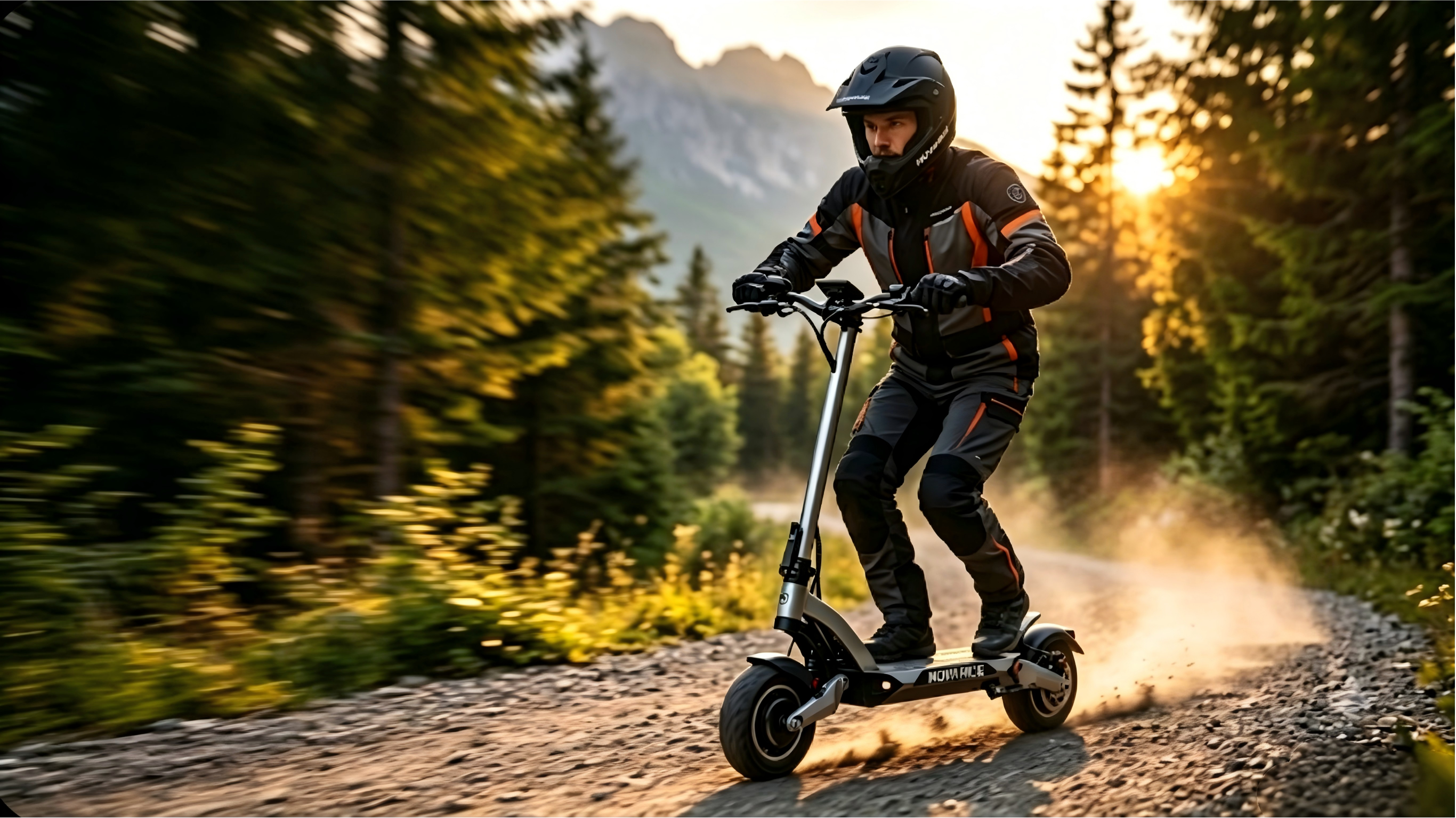
Confused between single and dual motor electric scooters? Learn the pros, cons, and performance differences.
Single vs. Dual Motor: The Core Difference
When choosing your electric scooter, the motor configuration is the single most important factor determining how the machine behaves under your feet. It's not just about speed; it's about how the machine handles the energy you demand.
1. Single Motor: The Efficiency King for Urban Commuters
Single motor electric scooters are engineered specifically for the daily urban commute. By focusing on a single drive unit, these models optimize energy consumption, providing a seamless balance between power and portability.
- Superior Portability: Significantly lighter build, ideal for carrying onto subways or climbing apartment stairs.
- Optimized Energy Efficiency: Lower power draw extends your range on flat, paved surfaces, perfect for city riding.
- Reduced Maintenance: A simpler drivetrain with fewer moving parts leads to lower long-term service costs for commuters.
- Ideal Use-Case: Flat city streets, smooth bike lanes, and "last-mile" office commuting.
2. Dual Motor: The Off-Road Beast for Technical Terrain
When your route transitions from smooth pavement to steep inclines and rugged trails, a dual-motor configuration becomes a performance necessity rather than a luxury. By housing independent motors in both the front and rear wheels, these machines provide superior handling on unpredictable surfaces.
- Unmatched Hill Climbing: High-torque output allows you to conquer 30° inclines that would force single-motor units to a halt.
- Enhanced Traction Control: Distributing power to both wheels prevents spin-out on loose gravel, wet grass, and mud.
- Advanced Redundancy: Dual motor systems often feature dual controllers, providing an extra layer of reliability during demanding rides.
- Ideal Use-Case: Off-road shredding, steep hill climbs, and riding for heavy riders (80kg+).
Pro Tip for Off-Roading:
In loose sand, engage dual motors before entering the patch. This prevents the rear wheel from digging in and losing momentum.
Why Motor Power Matters
- Torque: Essential for heavy riders and tackling steep elevation changes safely.
- Safety & Redundancy: Dual motor setups provide a fallback; if one controller experiences a glitch, you have another to get you home.
- Ride Quality: Dual motors offer a more visceral, connected feeling on technical terrain.
How to Calculate Required Torque for Your Ride
Not all hills are created equal. When deciding if you need a single or dual-motor setup, you should look at the gradient (slope) of the terrain you plan to conquer.
The Rule of Thumb:
"For a rider weighing 80kg (175lbs), tackling a 15% incline requires a minimum of 40-50 Newton-meters (Nm) of torque to maintain a steady climbing speed without stalling."
To estimate if your scooter can handle your commute, use this simple logic:
- Identify the Gradient: Most urban hills are 5-10%. Steep off-road trails can exceed 20%.
- Calculate Total Load: Add your body weight to the scooter's weight. Every 10kg added requires roughly 5-8% more torque to maintain the same speed.
- Match to Motor Type: If your route includes frequent climbs over 15%, a Dual Motor system is recommended.
Conclusion: Which one fits your lifestyle?
If you are a city commuter who prioritizes range and portability, the Single Motor X1 is your best companion. However, for the true adventure seeker who wants to conquer off-road trails and steep grades, the Dual Motor X14 or S3 is the only way to go.
Quick Comparison: Which one fits you?
| Feature | Single Motor | Dual Motor |
|---|---|---|
| Best For | Urban Commuting | Off-Road & Hills |
| Hill Climbing | 10° - 15° Slopes | 30°+ Slopes |
| Range Efficiency | High | Moderate |
| Price | < $1,000 (Budget) | > $1,000 (Premium) |
The Verdict: Which one fits you?
Choosing between a single and dual motor electric scooter ultimately comes down to your riding environment and specific needs. If your daily journey consists of flat city pavement and you prioritize budget-friendly portability, the Single Motor setup is the most efficient, lightweight choice for your lifestyle. However, for riders who tackle steep terrain, heavy payloads, or technical off-road trails, the premium investment in a Dual Motor system pays for itself. It provides the superior traction, torque, and reliability needed to conquer obstacles that stop standard scooters in their tracks.
The Physics Behind the Motor: Why Two is Better Than One
Many riders ask: "Why does my electric scooter need two motors?" From a physics perspective, it comes down to two critical factors: Torque Multiplication and Thermal Efficiency.
- Load Distribution & Torque: A single motor must fight gravity and rolling resistance alone. When you encounter a steep incline, the motor is forced to draw high currents to maintain speed, which pushes the system toward its thermal limit. By splitting this load between two motors, each unit operates well within its optimal efficiency range.
- Heat Management: Electric motors are essentially energy converters. When pushed to their limit, they convert a significant portion of electrical energy into wasted heat rather than kinetic movement. Dual motor systems allow both motors to run cooler under identical load conditions, preventing the "thermal throttling" that often causes single-motor scooters to slow down on long climbs.
- Redundancy & Reliability: Beyond pure physics, there is the engineering concept of redundancy. If one controller or motor experiences an electrical fault, a dual-motor system often allows the scooter to continue operating on the remaining motor, providing a safety net that a single-motor configuration simply cannot offer.
In essence, dual motors aren't just about "more power"—they are about system longevity and maintaining high performance under demanding conditions that would otherwise cause a single-motor drivetrain to degrade prematurely.
Common FAQs
Q1: Can I upgrade a single motor scooter to dual motor?
Generally, no. A dual motor setup requires a specific frame design, a more powerful controller, and a beefier battery management system (BMS). It is far more cost-effective and safer to buy a dedicated dual motor scooter from the start.
Q2: Does a dual motor scooter drain the battery faster?
Yes, it can. However, many of our dual-motor models feature a "Single Motor Mode" switch, allowing you to optimize battery life while cruising on flat city streets, ensuring you get the best range when extreme power isn't needed.
Q3: Does a dual motor setup require more maintenance?
It requires slightly more attention to tire wear and controller synchronization. However, because each motor works less to move the same load compared to a single motor pushing its limits, the individual motor longevity is often excellent.
Q4: Which is quieter, single or dual motor?
Single motors are generally slightly quieter due to fewer mechanical components and lower peak electrical draw. That said, our high-performance dual motor scooters are engineered with advanced sine-wave controllers for exceptionally quiet operation.
Q5: Are dual motor scooters legal everywhere?
Legality depends on local regulations. Some jurisdictions have strict speed or wattage caps for electric scooters. Always check your local bylaws regarding motor power output before purchasing a high-performance off-road model for street use.