Best Electric Scooter Buying Guide 2026: How to Choose the Right Model (Beginner to Pro)
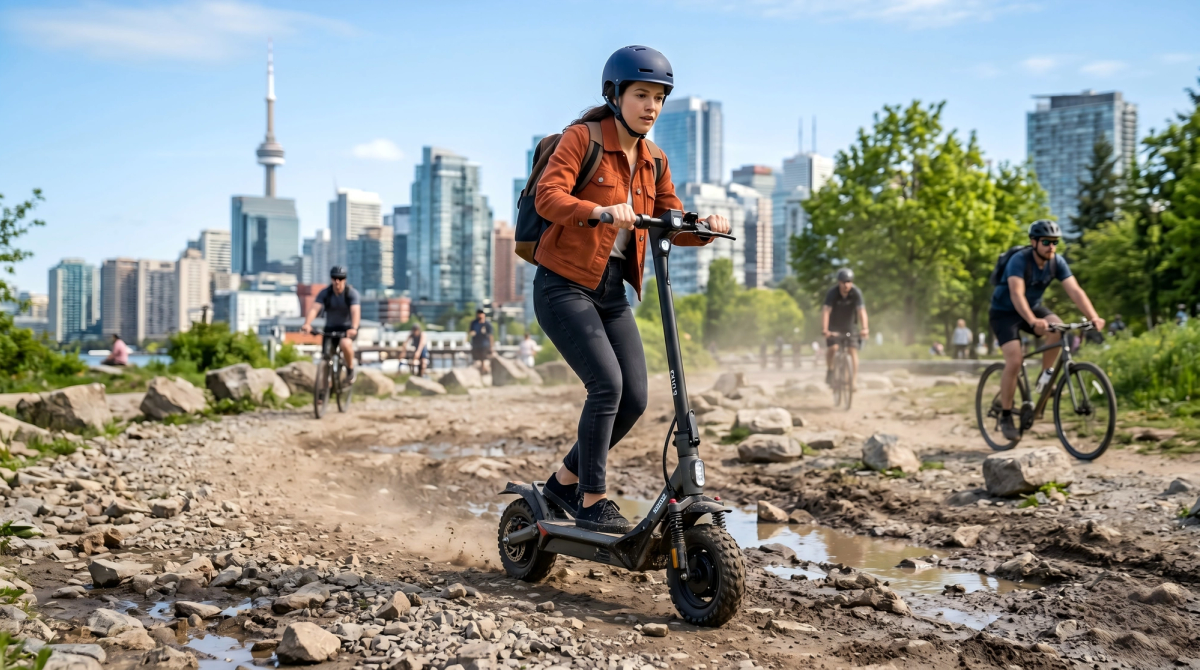
Best Electric Scooter Buying Guide 2026: How to Choose the Right Model Electric scooters have rapidly evolved from a simple urban commuting tool into one of the most versatile personal mobility solutions in 2026. Whether you are navigating busy city streets, commuting to work, or exploring off-road trails, the right electric scooter can completely transform how you move through your daily life. However, choosing the best electric scooter is no longer a simple decision. With dozens of brands, motor types, battery configurations, and performance levels available, many buyers end up overwhelmed—or worse, choosing a model that does not match their actual needs. Some riders prioritize speed, while others care more about portability, battery range, or off-road capability. Beginners often make the mistake of focusing only on price, while ignoring long-term factors like battery life, safety systems, and terrain suitability. This guide is designed to simplify that decision. You will learn how to evaluate electric scooters based on real-world usage rather than marketing claims. From single motor vs dual motor performance to battery life, safety features, and rider profiles, this guide will help you confidently choose the right model for your lifestyle—whether you are a beginner or an experienced rider.
Best Electric Scooter Buying Guide 2026: How to Choose the Right Model
Electric scooters have rapidly evolved from a simple urban commuting tool into one of the most versatile personal mobility solutions in 2026. Whether you are navigating busy city streets, commuting to work, or exploring off-road trails, the right electric scooter can completely transform how you move through your daily life.
However, choosing the best electric scooter is no longer a simple decision. With dozens of brands, motor types, battery configurations, and performance levels available, many buyers end up overwhelmed—or worse, choosing a model that does not match their actual needs.
Some riders prioritize speed, while others care more about portability, battery range, or off-road capability. Beginners often make the mistake of focusing only on price, while ignoring long-term factors like battery life, safety systems, and terrain suitability.
This guide is designed to simplify that decision. You will learn how to evaluate electric scooters based on real-world usage rather than marketing claims. From single motor vs dual motor performance to battery life, safety features, and rider profiles, this guide will help you confidently choose the right model for your lifestyle—whether you are a beginner or an experienced rider.
An electric scooter is a battery-powered personal transportation device designed for short to medium-distance travel. It typically consists of a standing platform, two wheels, handlebars, and an electric motor powered by a rechargeable battery.
In 2026, electric scooters have become significantly more advanced compared to early models. Modern scooters now feature improved motor efficiency, longer battery life, better suspension systems, and enhanced safety features such as dual braking systems and integrated lighting.
Electric scooters are widely used for three main purposes: urban commuting, recreational riding, and off-road exploration. For city users, they offer a fast and convenient alternative to cars or public transportation, especially for short daily commutes. For leisure riders, they provide an enjoyable way to explore parks, coastal paths, or open areas. For more advanced users, high-performance models with dual motors and reinforced suspension systems allow off-road riding on uneven terrain.
Unlike bicycles, electric scooters require minimal physical effort, making them accessible to a wide range of users. At the same time, they are more compact and cost-efficient than motorcycles or cars, positioning them as a practical middle ground in modern urban mobility.
Understanding what an electric scooter is—and what it is not—is the first step toward choosing the right model for your needs.
Single Motor vs Dual Motor (Core Buying Decision)
The Most Important Choice When Buying an Electric Scooter
One of the most critical decisions when choosing an electric scooter in 2026 is whether to go with a single motor or a dual motor system. This choice directly affects performance, riding experience, price, and the type of terrain you can handle.
Many beginners underestimate this decision and focus only on speed or price. However, the motor configuration determines how your scooter behaves in real-world conditions—especially when climbing hills, accelerating, or riding off-road.
Single Motor Electric Scooters
Single motor scooters are powered by one motor, usually located in either the front or rear wheel.
They are best suited for:
- City commuting
- Flat terrain riding
- Short to medium distances
- Beginner riders
Advantages:
- Lighter weight and easier to carry
- More energy efficient (longer battery life)
- Lower cost
- Simpler maintenance
Limitations:
- Less powerful acceleration
- Weak performance on steep hills
- Limited off-road capability
Single motor scooters are ideal if your priority is portability and daily commuting in urban environments.
Dual Motor Electric Scooters
Dual motor scooters use two motors—one in each wheel—providing significantly more power and control.
They are best suited for:
- Off-road riding
- Hilly or mountainous terrain
- High-performance riding
- Experienced riders
Advantages:
- Much stronger acceleration
- Excellent hill-climbing ability
- Better traction and stability
- Superior off-road performance
Limitations:
- Heavier and less portable
- Higher price point
- Faster battery consumption
Dual motor scooters are designed for riders who want power, performance, and versatility beyond city commuting.
Single vs Dual Motor: Which One Should You Choose?
If you are a beginner or mainly ride in the city, a single motor scooter is usually the most practical and cost-effective choice.
However, if you want more power, plan to ride on rough terrain, or value performance over portability, a dual motor scooter will provide a significantly better riding experience.
Choosing the right motor type is the foundation of selecting the right electric scooter—it defines everything from speed and comfort to where you can actually ride.
4. Battery, Range & Charging (What Really Matters in Real Life)
Understanding Battery Performance Before You Buy
Battery life is one of the most important factors when choosing an electric scooter in 2026. It determines how far you can travel, how often you need to recharge, and how practical the scooter is for your daily routine.
Many manufacturers advertise “maximum range” under ideal conditions, but real-world performance is often very different. Rider weight, terrain, speed, temperature, and riding style all significantly affect actual range.
🔋 What Determines Electric Scooter Range?
There are two key technical factors that define battery performance:
- Voltage (V): Higher voltage usually means stronger power output and better performance on hills.
- Ampere-hour (Ah): Higher Ah means larger energy storage and longer riding distance.
A scooter with a high Ah battery will generally offer longer range, but it may also be heavier and take longer to charge.
Real-World Range vs Advertised Range
One of the most common mistakes beginners make is trusting manufacturer claims without understanding testing conditions.
For example:
- Advertised range may assume a lightweight rider
- Flat terrain only
- Low speed mode
- No wind resistance
In real-world conditions, you should expect 60–70% of the claimed range in most cases.
This is why it is important to choose a scooter that exceeds your daily travel needs, not just meets them.
🔌 Charging Time and Practical Use
Charging time varies depending on battery size and charger type. Most electric scooters take between 4 to 10 hours for a full charge.
Fast charging options are available on some premium models, but frequent fast charging can slightly reduce long-term battery lifespan.
For daily commuters, overnight charging is usually the most convenient and battery-friendly solution.
🧠 Battery Degradation Over Time
Like all lithium-ion batteries, electric scooter batteries degrade gradually over time. After 1–3 years of regular use, you may notice reduced range and slower performance.
To extend battery life:
- Avoid fully draining the battery regularly
- Store the scooter in moderate temperatures
- Use manufacturer-recommended chargers
- Avoid constant fast charging when unnecessary
⚖️ Key Takeaway
When choosing an electric scooter, do not focus only on maximum range claims. Instead, consider your real daily usage and choose a model with at least 20–30% extra range buffer for comfort and reliability.
🌿 5. Speed, Power & Performance (What Actually Feels on the Road)
Why Speed Is Not the Only Performance Metric
When people think about electric scooters, speed is often the first thing that comes to mind. However, in 2026, real-world performance is not just about how fast a scooter can go in a straight line—it is about how it behaves under different riding conditions.
Acceleration, motor power, hill-climbing ability, and stability all play a more important role than top speed alone.
⚡ Motor Power (Watts Explained Simply)
Electric scooter power is usually measured in watts (W). This number tells you how strong the motor is.
Common categories include:
- 250W–500W: Entry-level scooters for flat city riding
- 500W–1000W: Balanced performance for commuting and light hills
- 1000W–2000W+: High-performance scooters for off-road and steep terrain
Higher wattage generally means better acceleration and stronger climbing ability, but also increased battery consumption.
🚀 Acceleration vs Top Speed
Top speed is often advertised as a marketing number, but acceleration is what you actually feel when riding.
- Strong acceleration improves safety in traffic
- Helps with uphill starts
- Makes riding more responsive and stable
A scooter with moderate top speed but strong acceleration often feels more powerful in real-world use than a high-speed scooter with weak torque.
🛑 Stability at High Speed
As speed increases, stability becomes more important than raw performance.
Key factors that affect stability include:
- Wheel size (larger wheels = better stability)
- Suspension system quality
- Frame build material
- Tire type (pneumatic vs solid)
Poor stability at high speed can significantly increase safety risks, especially on uneven roads.
🧠 Key Takeaway
Instead of focusing only on maximum speed, evaluate a scooter based on how it performs in everyday scenarios—especially acceleration, hill climbing, and stability.
For most riders, a well-balanced scooter between 500W and 1000W provides the best combination of safety, performance, and efficiency.
🌿 6. Safety Features (The Most Overlooked But Most Important Factor)
Why Safety Matters More Than Speed or Price
When choosing an electric scooter in 2026, safety should always be a top priority. Many buyers focus on speed, design, or price, but overlook the features that actually protect them on the road.
In real-world riding, unexpected situations like sudden braking, wet roads, uneven surfaces, and night visibility are far more common than high-speed riding conditions. This is why a well-designed safety system is essential for every rider, regardless of experience level.
🛑 Braking Systems (Your First Line of Defense)
A reliable braking system is one of the most important safety components of any electric scooter.
Common braking types include:
- Disc brakes: Strong and reliable stopping power, suitable for most riders
- Electronic brakes (E-brake): Smooth braking and energy recovery
- Hydraulic brakes (premium models): Maximum control and precision
A dual braking system (combining mechanical and electronic braking) is generally the safest option, especially for higher-speed scooters.
🛞 Tires: Stability and Grip
Tires play a major role in both comfort and safety.
- Pneumatic (air-filled) tires: Better shock absorption and grip, ideal for mixed terrain
- Solid tires: Low maintenance but less comfortable on rough roads
For most riders, pneumatic tires provide a significantly safer and smoother riding experience.
🏔 Suspension System (Ride Comfort + Control)
Suspension helps absorb shocks from uneven surfaces, potholes, and off-road terrain.
A good suspension system:
- Improves riding comfort
- Enhances control at higher speeds
- Reduces fatigue during long rides
Dual suspension systems (front + rear) are especially important for off-road or high-performance scooters.
💡 Lighting and Visibility
Visibility is often underestimated, but it is critical for night riding or low-light conditions.
Essential lighting features include:
- Bright front headlights
- Rear brake lights
- Side reflectors or LED strips
Good lighting not only helps you see the road but also ensures that other vehicles can see you clearly.
🧠 Key Takeaway
A safe electric scooter is not defined by one feature, but by a combination of braking systems, tire quality, suspension, and visibility.
If you are choosing between two models, always prioritize the one with better safety features—even if it means slightly lower speed or higher price.